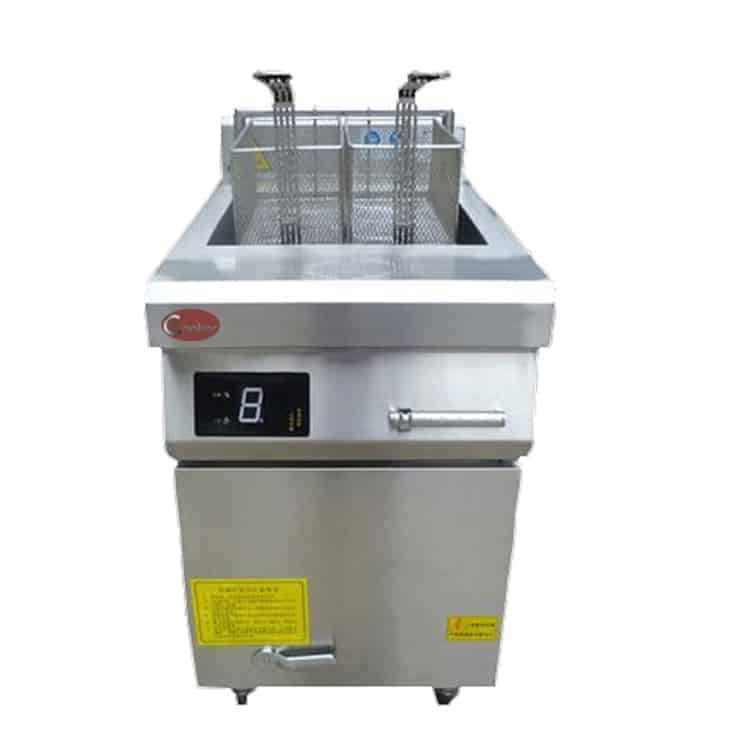
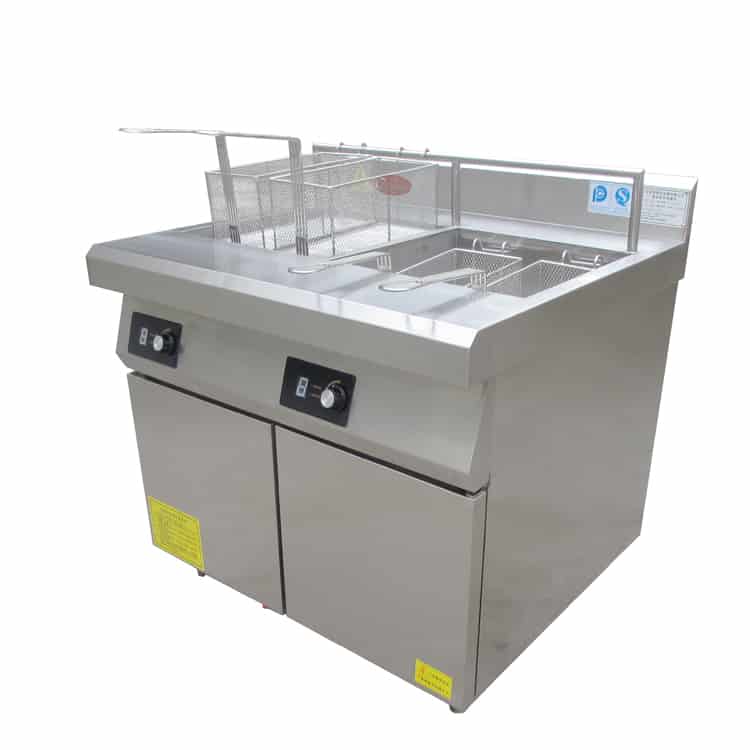
Commercial fryers’ oil hold capacity spans a wide range, and consumption rates vary drastically based on usage. AT Cooker offers models from 10L countertop to 80L dual-tank. Below, 14 factors that determine how much oil your fryer holds and how fast it consumes.
1. Commercial Fryers Typically Hold 15 to 60 Pounds of Oil
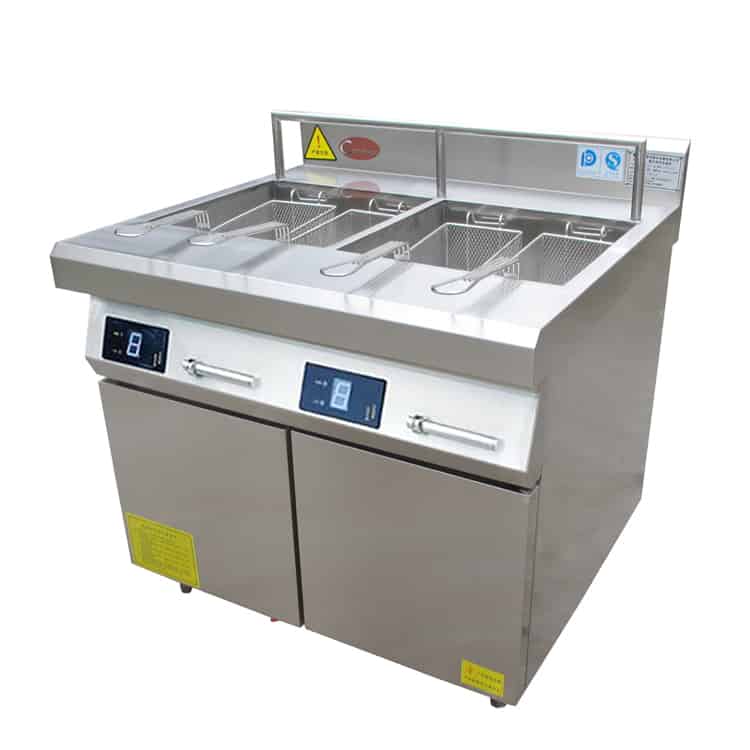
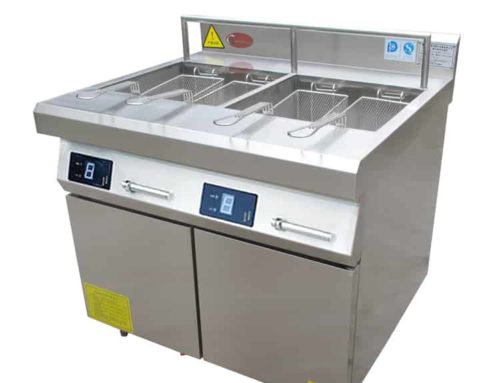
Most standard models fall between 15–60 lbs (17–65L), while industrial-grade units (like AT Cooker’s 40L×2 model) can hold up to 73 lbs (80L). The key is matching capacity to output: a small café needs far less oil than a busy burger chain.
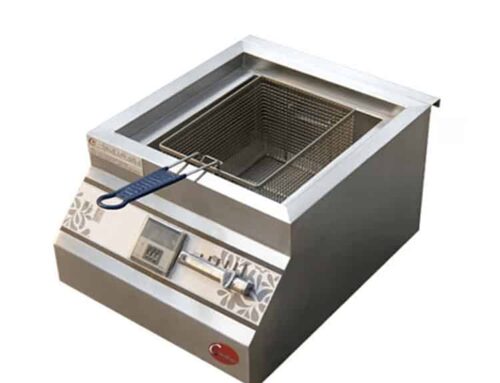
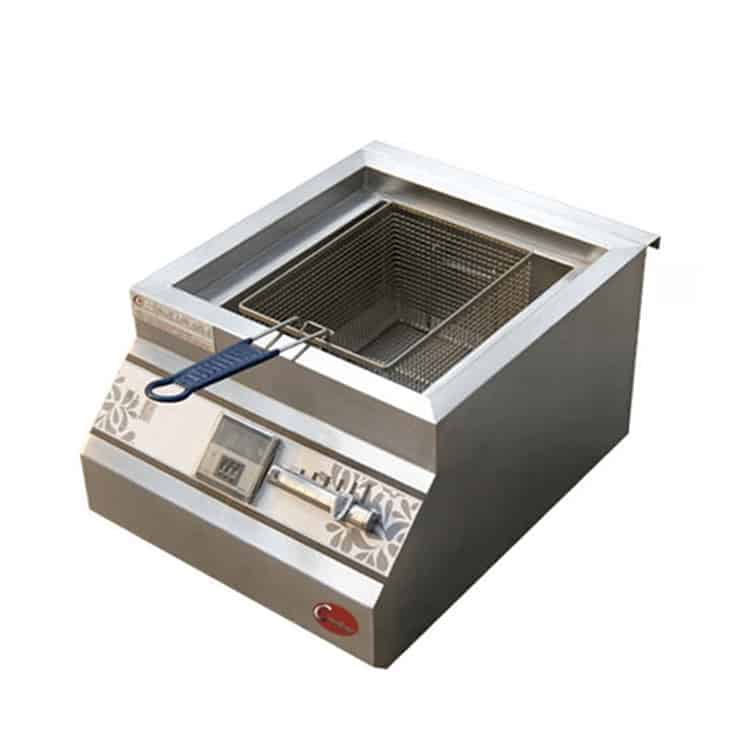
- Compact Countertop (5KW): 8.5–13.8 lbs (10–15L). Perfect for cafés or food trucks frying 50–100 portions daily.
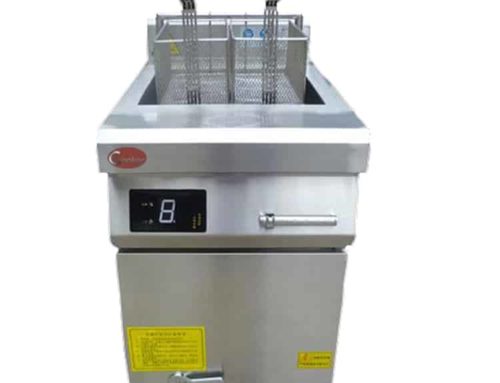
- Mid-Volume Freestanding (8–15KW): 19.5–21.16 lbs (23L). The 23L induction fryer is a bestseller—enough for 200–300 portions daily.
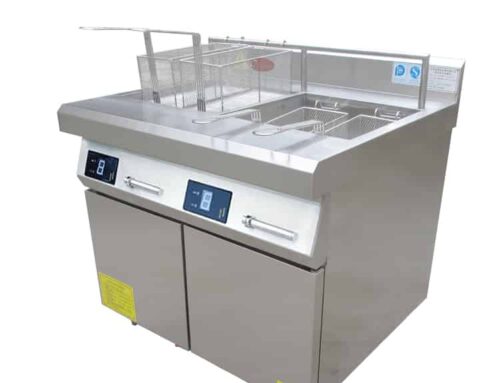
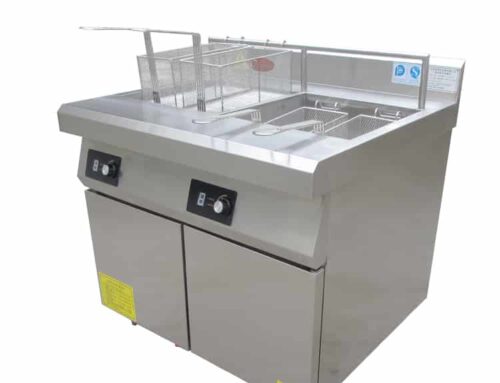
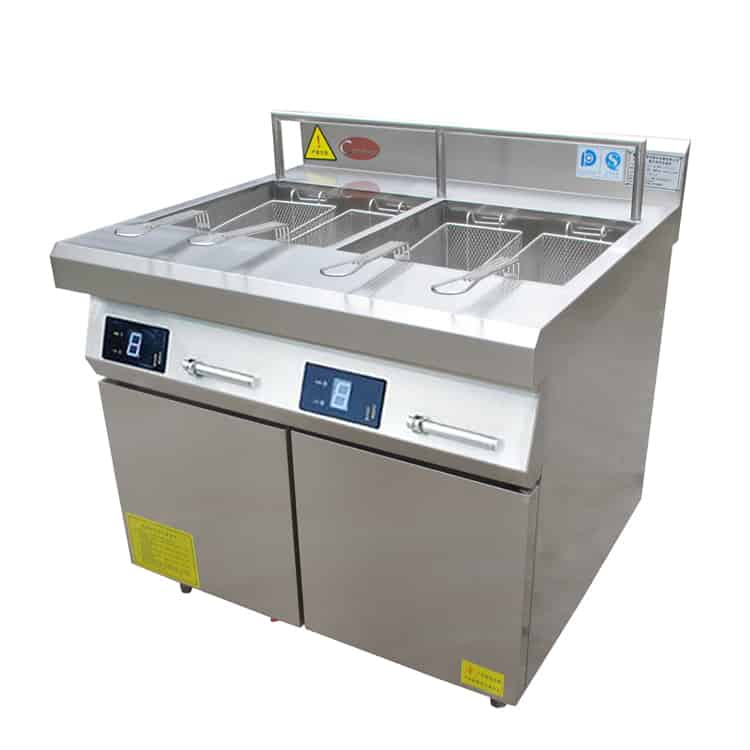
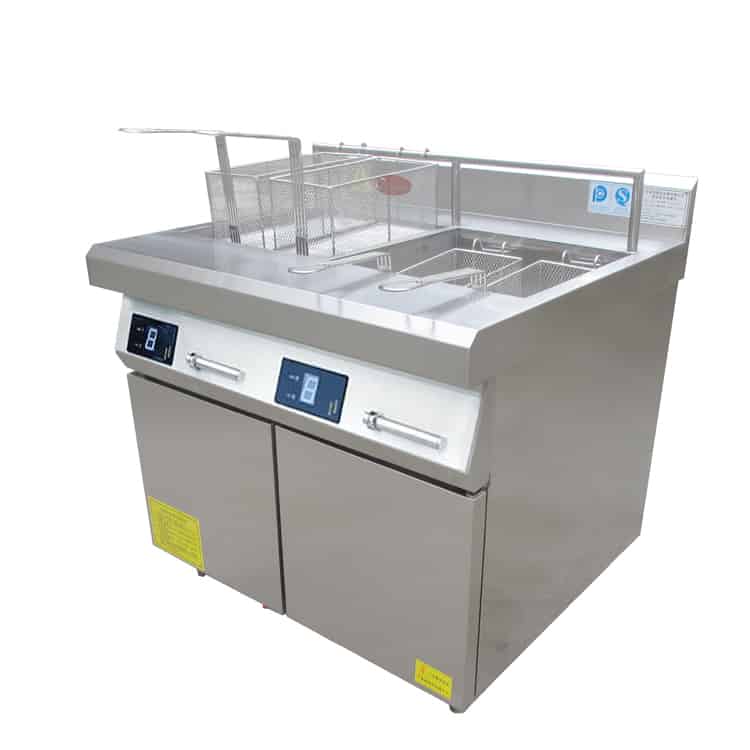
- High-Volume Dual-Tank (10–12KW×2): 68–73.6 lbs (80L total). Handles 500+ portions with separate tanks.
Oil Conversion: 1L vegetable oil = ~0.85 lbs; 1L peanut oil = ~0.92 lbs. All AT Cooker specs reference net oil capacity (usable volume).
| AT Cooker 모델 | 기름 용량 (L) | Oil Capacity (lbs) | 전력 | Ideal Kitchen | Daily Output |
|---|---|---|---|---|---|
| 5KW Single-Basket Countertop | 10L | 8.5 파운드 | 5KW | Cafés, food trucks | 50–100 |
| 5KW Dual-Basket Countertop | 15L | 12.75 파운드 | 5KW | Small restaurants | 100–150 |
| 23L Freestanding Induction | 23L | 19.55 파운드 | 8–15KW | 중형 레스토랑 | 200–300 |
| 40L×2 Dual-Tank | 80L (40L×2) | 68 파운드 | 10–12KW×2 | Stadiums, hotels | 500+ |
2. 기름 소비율은 사용 빈도에 따라 다릅니다.
High-volume operations (4+ hours daily) consume oil 2–3x faster than low-volume kitchens (1–2 hours daily). AT Cooker’s popular models and typical replacement cycles (vegetable oil):
- Low-Volume (1–2 hrs/day): 10L countertop, oil replacement every 5–7 days. ~42–60L monthly.
- Mid-Volume (3–4 hrs/day): 23L freestanding, replacement every 3–4 days. ~172–228L monthly.
- High-Volume (5+ hrs/day): 40L×2, replacement every 2–3 days. ~780–1,200L monthly.
FFA Threshold: Once free fatty acid exceeds 1%, oil produces off-flavors and smoke. AT Cooker’s 10-hour auto-shutoff timer reduces idle degradation by 15%.
3. 정기적인 여과는 기름 수명을 연장하고 소비량을 줄입니다.
Food particles left in oil accelerate degradation by burning and releasing acids. Filtration removes these particles, extending oil life by 30–50%. AT Cooker’s fryers simplify filtration with built-in faucet drains, cool-touch oil handles, and compatibility with commercial filtration machines.
| Filtration Method | Replacement Cycle | Monthly Consumption |
|---|---|---|
| 필터링 없음 | 3 days | 230L |
| 일일 필터링 | 5 days | 138L |
| 기계 필터링 | 6 days | 115L |
Case Study: A catering company in Miami: with daily filtration (10 min after closing), oil replacement went from every 3 days to every 5 days—saving 40% on oil costs monthly. For a 23L fryer, that’s $192/month savings.
4. Induction Precise Temperature Control Slows Oil Degradation
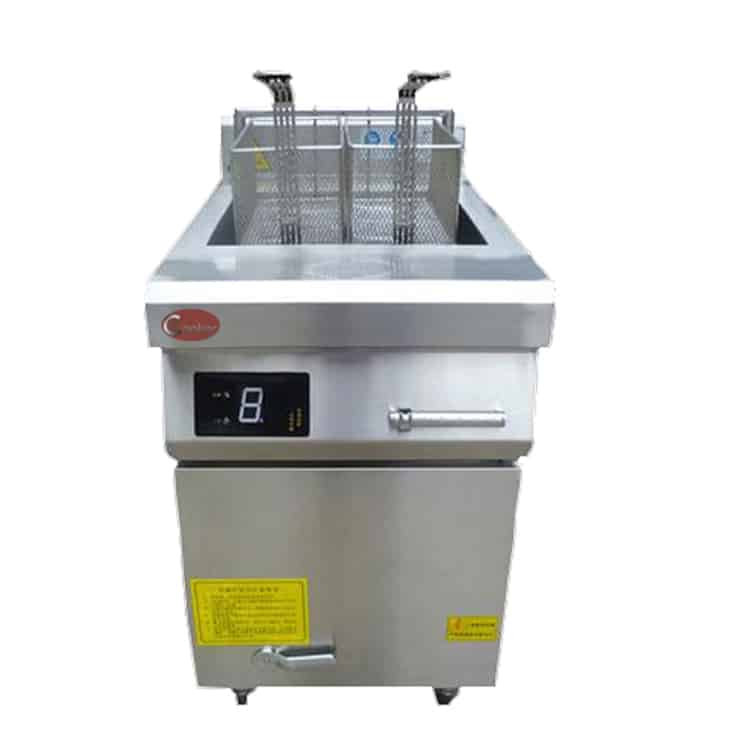
Oil degradation accelerates above 375°F (190°C). AT Cooker’s induction fryers use PID controllers adjusting heat 10 times/sec, maintaining ±2°F—far more precise than gas (±5–8°F) or standard electric (±3–4°F). Result: oil lasts longer.
A chicken chain: “Gas fryer bounced 360–385°F, oil degraded every 2 days. Induction stays at 370°F exactly, oil lasts 4 days. Cut oil costs in half.” Anti-high-temperature warnings alert staff if oil nears 390°F, saving 10–15L monthly.
5. Oil Capacity Is Proportional to Fryer Size
Larger fryers hold more oil because they’re designed for higher demand. AT Cooker’s dimensions:
- Countertop 10L: 400×400×450mm, tank 200×280×180mm.
- Freestanding 23L: 500×800×950mm, tank 340×340×200mm.
- Dual-Tank 80L: 1000×800×1100mm, tank 400×400×250mm×2.
Lesson: A Las Vegas hotel: “Bought a small countertop fryer with 20L tank—weighed 60 lbs full, couldn’t move it. Switched to AT Cooker’s 15L countertop, lightweight enough to store when not in use.”
6. Food Type Influences Oil Consumption
Breaded/battered foods shed crumbs and absorb more oil, accelerating degradation. Plain foods produce fewer particles. A kitchen frying mostly breaded foods replaces oil 20–30% more frequently.
- Breaded (chicken): 23L fryer, oil every 3 days. Monthly: 230L. “Breading sheds crumbs that burn in oil.”
- Plain (fries): Same 23L fryer, oil every 4 days. Monthly: 172L. “Fries produce almost no crumbs.”
Tip: AT Cooker recommends separate fryers for breaded and plain foods. A Chicago diner: “Separate fryers let us keep fry oil 4 days, chicken oil 3 days—saving 15L monthly.”
7. 고급 기름 관리 시스템으로 품질 모니터링
Modern fryers include oil quality sensors measuring FFA levels or conductivity in real time. AT Cooker’s 40L×2 offers an optional sensor integrated with digital display:
- Measures conductivity every 15 minutes.
- Displays “Quality Score” (1–10): 10=fresh, 3=replace soon, 1=replace immediately.
- Alert at score 3, giving staff time to plan replacement.
결과: A hotel with 10 fryers: “Before, changed oil every 3 days regardless. Now only when sensor says so—sometimes lasts 4 days, saving 50L monthly.”
8. Electric Fryers’ Consistent Heat Lowers Consumption
Gas fryers have hot spots (areas of higher temperature) that cause oil to degrade faster locally. AT Cooker’s induction fryers use magnetic heating across the entire tank bottom, eliminating hot spots.
- 가스: Hot spots 390°F, rest 370°F. FFA 1.5% in hot spots vs 0.8% elsewhere—entire batch replaced, wasting 50%.
- AT 쿠커 유도: 370°F uniform. FFA 0.8% everywhere—no wasted oil.
Hidden Benefit: Electric fryer users replace oil 15–20% less frequently than gas users. A 20-location chain: “Switched from gas—went from 10,000L to 8,500L monthly.”
9. 기름 교체 주기율이 품질 및 소비에 미치는 영향
High turnover (large volumes daily) means oil doesn’t degrade much. Low turnover means oil sits longer, degrading from idle heat. Two kitchens with the same fryer can have drastically different consumption.
- High Turnover: Burger chain, 23L, 300 portions/day. Oil lasts 3 days (7.6L/day). Monthly: 228L.
- Low Turnover: Café, same 23L, 50 portions/day. Oil lasts 4 days (5.75L/day). Monthly: 172L. But quality is lower.
Optimization: A Seattle café: “Switched from 23L to 10L fryer for 50 portions/day. Oil lasts 3 days, tastes fresh. Monthly use dropped 172L to 100L.”
10. Environmental Factors Increase Evaporation
High ambient temperature (>80°F) or humidity (>60%) accelerates oil evaporation—5–10% of monthly consumption. AT Cooker’s 23L fryer has 3-layer insulation reducing evaporation by 70%.
Florida Test: “Old uninsulated fryer lost 1L/day to evaporation. AT Cooker insulated fryer loses 0.3L daily—saving 21L monthly ($63).”
Tips: keep lid closed when not in use, install exhaust fans, monitor levels weekly. An Arizona bakery: “Lid closed + exhaust fan—evaporation 0.8L to 0.4L daily. 146L saved/year.”
11. 유지보수 관행으로 기름 수명 연장
AT Cooker recommends three maintenance areas:
- 탱크 청소: Weekly (non-abrasive cleaner + soft brush). Dirty tank reduces oil life by 20%.
- Element Inspection: Quarterly. Faulty elements cause hot spots. AT Cooker induction coils are sealed—just wipe with dry cloth.
- 씰 교체: Annually. Worn seal increases evaporation and temperature fluctuations.
Case Study: School cafeteria with 5 AT Cooker fryers: “Before maintenance, oil every 3 days. After weekly cleaning + quarterly checks, oil lasts 4 days—saving 50L monthly.”
12. 초기 기름 충전량 대 실제 소비량
Initial fill = one-time cost to fill to max level. Actual consumption = recurring replacement. Confusing the two leads to budget errors.
- 10L Countertop: Initial = 10L. Daily consumption = ~1.4–2L.
- 23L Freestanding: Initial = 23L. Daily consumption = ~5.75–7.6L.
- 40L×2 Dual-Tank: Initial = 80L. Daily consumption = ~26–40L.
Budget Tip: A new restaurant owner: “Budgeted for 23L initial fill ($69) but forgot monthly consumption (172L = $516). AT Cooker helped adjust budget to include both.” Use their Consumption Calculator on the website.
13. 오일 레벨 센서는 과다 사용 및 유출을 방지합니다.
AT Cooker’s fryers have two sensor types:
- 저유 센서: Alerts when below minimum safe level. Prevents overheating and degradation. Displays “Low Oil” on screen.
- Overfill Sensor (high-end): Stops oil flow at max level. Prevents spills during cooking.
Real Impact: A fast-food chain: “Low oil sensor saved us from ruining oil multiple times. Used to waste 5L monthly from overheating; now zero.”
14. 비용 분석: 오일 구매 + 폐기 비용
Total oil costs include both purchase and disposal (hidden cost, 10–15% of total). Monthly analysis for AT Cooker’s 23L fryer (172L consumption):
| Cost Item | Calculation | Monthly |
|---|---|---|
| Oil Purchase | 172L × $3/L | $516 |
| Disposal | 172L × $0.30/L | $51.60 |
| Total | $567.60 |
Many AT Cooker customers partner with biodiesel companies for free pickup + $0.10/L rebate. A Miami hotel: “Cuts disposal to zero, adds $17.20/month.” Optimizing both can reduce total oil costs 15–20% annually ($1,021–$1,362 for a $6,811/yr kitchen).
5년 보증 | 2년 무료 교환 | 1년 무료 반품
상업용 튀김기의 최적 오일 용량은 얼마인가요?
상업용 튀김기는 일반적으로 10~50리터의 오일 용량 범위를 갖습니다. 최적 용량은 일일 튀김 양에 따라 달라집니다. 대량 판매 식당은 30~50L 탱크가 유리하고, 소규모 운영은 10~20L 기기를 사용할 수 있습니다. AT Cooker는 다양한 사업 규모에 맞춰 15L~40L 모델을 제공합니다.
상업용 튀김기 오일은 얼마나 자주 교체해야 하나요?
오일 교체 주기는 사용량과 음식 유형에 따라 달라집니다. 대량 운영(매일 4시간 이상 튀김)은 3~5일마다 오일을 교체해야 합니다. 중간 사용(매일 2~3시간)은 5~7일 간격이 가능합니다. 항상 테스트 스트립이나 육안 검사로 오일 품질을 확인하여 어두운 색, 거품, 이취 여부를 점검하세요.
튀김기 오일 소비 속도에 영향을 주는 요인은 무엇인가요?
주요 요인은 다음과 같습니다: 튀김 온도(높은 온도는 분해를 가속화), 음식 수분 함량(젖은 음식은 물을 유입), 반죽/빵가루 흡수, 여과 빈도, 오일 유형. 정밀한 온도 제어가 가능한 인덕션 튀김기는 가스 모델 대비 오일 소비를 15-20% 줄일 수 있습니다.
상업용 튀김기에서 오일 소비를 줄이려면 어떻게 해야 하나요?
모범 사례: 최적 온도 유지(175-190°C), 음식 입자를 제거하기 위해 매일 오일 여과, 바구니 과적 방지, 높은 발연점의 고품질 오일 사용, 산화 방지를 위해 사용하지 않을 때 튀김기 덮기, 정밀한 온도 제어와 에너지 효율을 위해 인덕션 튀김기 선택.
인덕션과 가스 튀김기의 오일 효율 차이는 무엇인가요?
인덕션 튀김기는 90-95% 에너지 효율을 제공하는 반면 가스 모델은 30-45%입니다. 정밀한 온도 제어는 오일 열화를 줄여 오일 수명을 20-30% 연장합니다. 인덕션은 또한 국부적인 오일 연소를 일으키는 핫스팟을 제거합니다. 그 결과 오일 소비 감소, 더 나은 음식 품질, 시간이 지남에 따라 운영 비용 절감이 이루어집니다.
오일 용량 및 소비량에 맞는 상업용 튀김기 선택
Share your daily frying volume, food type, and kitchen size—we’ll recommend the ideal fryer to minimize consumption and costs.