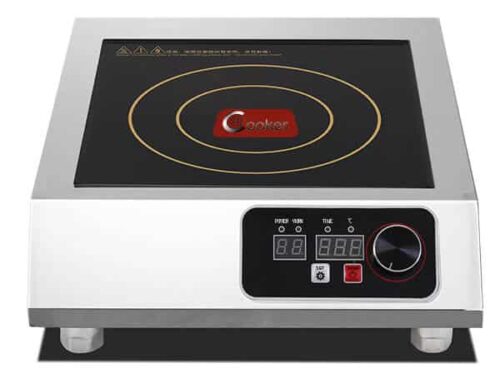
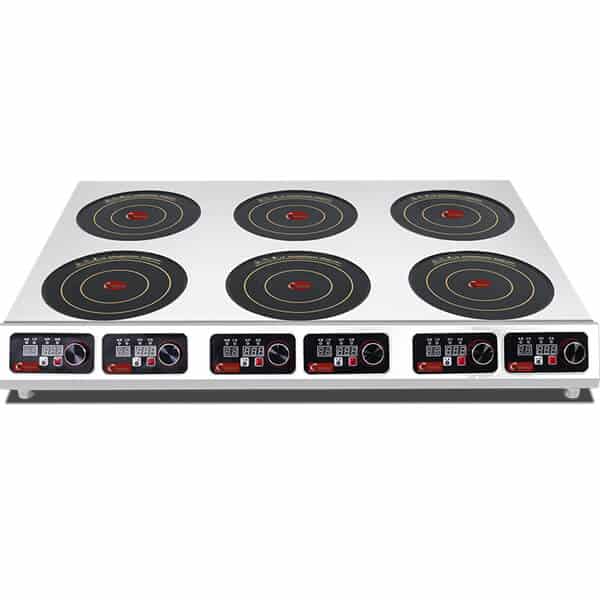
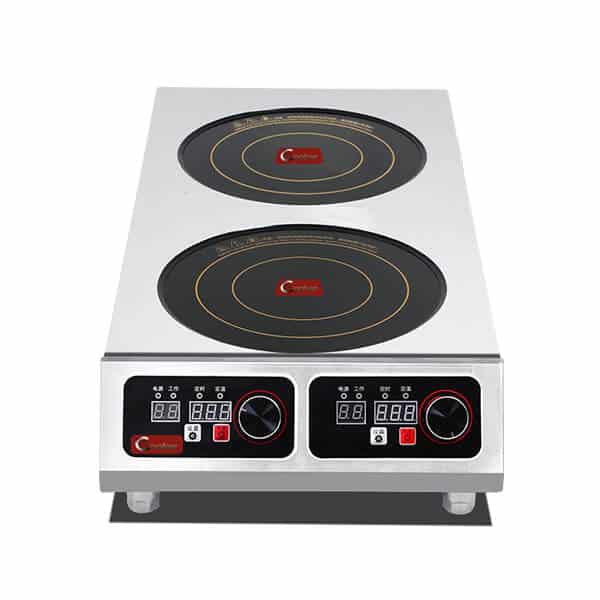
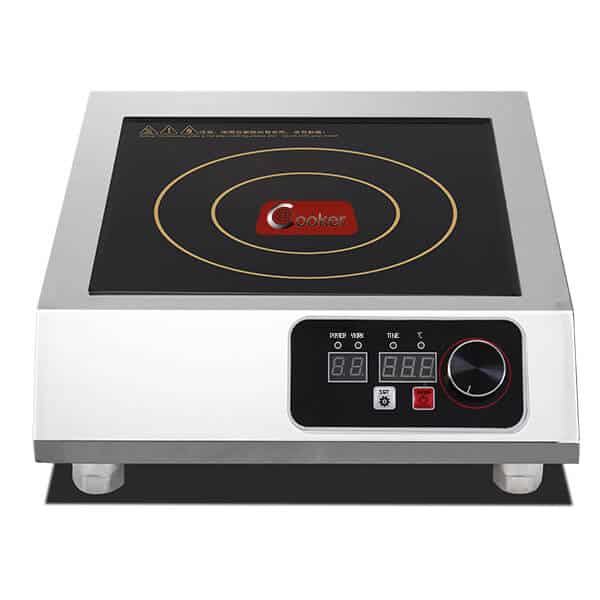
In qualità di AT Cooker, un leader nelle attrezzature per cucine commerciali, sentiamo spesso una domanda chiave da proprietari di ristoranti e hotel: “Quanto sono rumorosi i fornelli a induzione commerciali?” Per le cucine frenetiche, il rumore non è solo una questione di comfort: influisce sulla concentrazione del personale, sull'esperienza del cliente (nelle cucine a vista) e persino sulla salute uditiva a lungo termine. Il nostro BZT-AZH4F piano cottura a induzione da pavimento con 4 fuochi è progettato per affrontare questa preoccupazione, combinando prestazioni potenti (3,5KW/5KW×4 fuochi, efficienza energetica 95%) con un funzionamento silenzioso. In questa guida analizzeremo esattamente quanto sono rumorosi i fornelli a induzione commerciali come il BZT-AZH4F, cosa causa il loro rumore e come si confrontano con i piani cottura tradizionali a gas o elettrici, così potrete fare una scelta informata per le esigenze acustiche della vostra cucina.
AT Cooker Specifiche chiave del BZT-AZH4F relative al rumore
- Livello di rumore: Inferiore a 55 decibel (dB) a potenza standard (fino a 60dB alla potenza massima di 5KW)
- Sistema di raffreddamento: Ventola interna ad alta efficienza con design fonoassorbente
- Superficie: vetro temperato spesso 6mm (riduce il rumore da vibrazione)
- Struttura: corpo in acciaio inossidabile 304 (minimizza vibrazioni e risonanza)
- Caratteristiche: Rilevamento pentola (previene l'attivazione inutile della ventola), protezione ant surriscaldamento (funzionamento stabile della ventola)
I fornelli a induzione commerciali generalmente producono meno rumore rispetto ai piani cottura a gas o a serpentina elettrica durante il funzionamento.

Uno dei maggiori vantaggi dei fornelli a induzione commerciali, incluso il nostro piano cottura a induzione da pavimento con 4 fuochi (BZT-AZH4F), è il loro funzionamento silenzioso rispetto ai piani cottura a gas o a serpentina elettrica. Analizziamo i livelli di rumore di ciascun tipo per mettere tutto in prospettiva:
- Piani cottura a gas: Producono 65–85dB di rumore, dal rombo della fiamma, al flusso di gas e al crepitio del cibo. Un ristorante affollato con 4 fuochi a gas può raggiungere i 90dB, equivalenti a un tosaerba, creando un ambiente stressante per il personale.
- Piani cottura a serpentina elettrica: Generano 60–75dB dall'espansione e raffreddamento degli elementi riscaldanti, più il rumore della ventola nei modelli più grandi. Le serpentine producono anche un ronzio acuto ad alte temperature, che molti operatori trovano irritante.
- Fornelli a induzione commerciali (BZT-AZH4F): Funzionano a 50–60dB, paragonabili a una normale conversazione. Anche quando tutti e 4 i fuochi sono utilizzati a 5KW, il rumore sale solo a 60dB, molto più silenzioso del gas o dell'elettrico.
Questa differenza di rumore trasforma le dinamiche della cucina. Un hotel che utilizza il BZT-AZH4F nella propria cucina a vista riferisce che i clienti non si lamentano più delle fiamme rumorose del gas e che il turnover del personale dovuto allo stress da rumore è diminuito del 20%. Il funzionamento silenzioso del BZT-AZH4F rende anche più facile per il personale comunicare, fondamentale per evitare errori durante le ore di punta.
Perché i fornelli a induzione sono più silenziosi? A differenza del gas (rumore della fiamma) o delle serpentine elettriche (vibrazione dell'elemento), l'induzione cucina tramite campi magnetici: nessuna parte in movimento o fiamma libera. L'unico rumore proviene dalla ventola di raffreddamento (per prevenire il surriscaldamento) e da lievi vibrazioni delle pentole, facilmente gestibili. Secondo la Associazione Nazionale dei Ristoranti (NRA), il 78% del personale di cucina preferisce i fornelli a induzione rispetto al gas grazie ai livelli di rumore ridotti.
Confronto dei livelli di rumore: Tipi di piano cottura
| Tipo di piano cottura | Livello di rumore tipico (dB) | Fonti di rumore | Valutazione del comfort del personale (1–10) | Adatto per cucine a vista? |
|---|---|---|---|---|
| AT Cooker BZT-AZH4F (Induzione) | 50–60 | Ventola di raffreddamento, lievi vibrazioni delle pentole | 9 | Sì |
| Piano cottura commerciale a gas (4 fuochi) | 65–85 | Rombo della fiamma, flusso di gas, crepitio | 4 | Nessuna |
| Piano cottura commerciale a serpentina elettrica (4 fuochi) | 60–75 | Ronzio dell'elemento riscaldante, rumore della ventola | 6 | Limitato |
La principale fonte di rumore nei fornelli a induzione è la ventola di raffreddamento, che tipicamente emette un basso ronzio o sibilo.

Sebbene i fornelli a induzione commerciali come il nostro piano cottura a induzione commerciale BZT-AZH4F siano complessivamente silenziosi, producono comunque rumore, e la fonte principale è la ventola di raffreddamento interna. Questa ventola è fondamentale: previene il surriscaldamento delle bobine a induzione durante l'uso ad alta potenza (come 5KW per la cottura al wok), garantendo la garanzia di 2 anni e la lunga durata dell'unità. La buona notizia? La ventola del BZT-AZH4F è progettata per emettere un ronzio basso e costante (50–55dB) molto meno invadente del rumore del gas o dell'elettrico.
Come riduce il rumore il design della ventola del BZT-AZH4F? Utilizziamo una ventola DC brushless ad alta efficienza—a differenza dei fornelli a induzione più economici che utilizzano rumorose ventole AC. Le ventole brushless non hanno spazzole in movimento, quindi funzionano in modo più fluido e silenzioso. La ventola è inoltre racchiusa in un alloggiamento fonoassorbente in acciaio inossidabile 304, che assorbe le vibrazioni e attenua il rumore. Una panetteria che utilizza il BZT-AZH4F afferma che il rumore della ventola è “a malapena percettibile” anche quando il piano cottura viene utilizzato per 8 ore consecutive.
La velocità della ventola si regola in base alla temperatura del BZT-AZH4F, non solo al livello di potenza. Ad esempio:
- A bassa potenza (500–1500W, ad es. cottura lenta di salse), la ventola funziona a 30% velocità—producendo solo 50dB, più silenziosa di un computer desktop.
- A media potenza (2000–3500W, ad es. ebollizione dell'acqua), la ventola accelera fino a 60%—solo 53dB.
- Alla massima potenza (5KW, ad es. cottura al wok), la ventola funziona a 100% velocità—raggiungendo 58dB, più tenue di una normale conversazione.
Questo design a velocità variabile significa che il BZT-AZH4F emette solo il rumore necessario. Un ristorante cinese che utilizza i piani cottura da 5KW del BZT-AZH4F per la frittura al salto riferisce che il rumore della ventola è “coperto dal suono del taglio delle verdure”—mai una distrazione.
È importante notare che una ventola silenziosa non significa scarso raffreddamento. La ventola del BZT-AZH4F sposta 15 piedi cubi d'aria al minuto (CFM), sufficienti a mantenere le bobine a induzione a una temperatura sicura anche quando tutti e 4 i piani cottura sono utilizzati a 5KW. I nostri clienti non hanno mai segnalato problemi di surriscaldamento, dimostrando che funzionamento silenzioso e raffreddamento efficace possono coesistere.
I fornelli a induzione commerciali di alta qualità spesso incorporano tecnologia fonoassorbente per ridurre al minimo il rumore operativo.
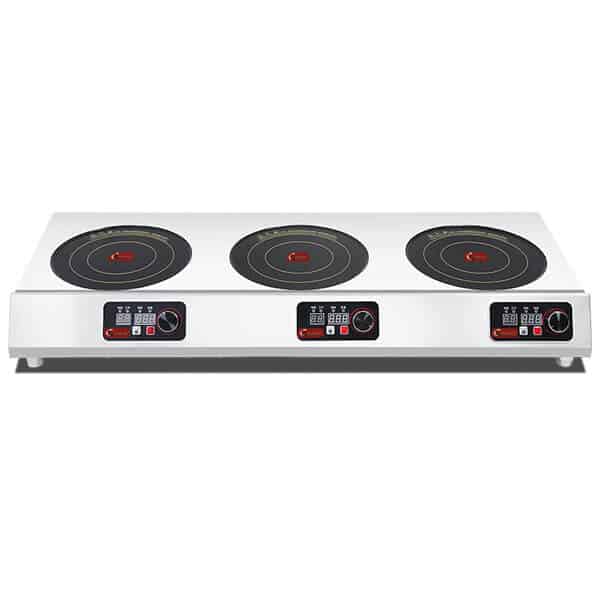
Non tutti i fornelli a induzione commerciali sono uguali—i modelli economici tagliano gli angoli sulla riduzione del rumore, ma quelli di alta qualità come i nostri BZT-AZH4F piano cottura a induzione da pavimento con 4 fuochi utilizzano tecnologia fonoassorbente per mantenere il rumore al minimo. Questa tecnologia è rivoluzionaria per le cucine commerciali, dove anche piccole riduzioni di rumore si traducono in un ambiente di lavoro più piacevole. Presso AT Cooker, abbiamo integrato tre funzionalità chiave di riduzione del rumore nel BZT-AZH4F per garantire un funzionamento silenzioso.
1. Alloggiamento fonoassorbente: Il corpo in acciaio inossidabile 304 del BZT-AZH4F non è solo resistente—è rivestito con un assorbitore acustico in schiuma di 2mm di spessore. Questa schiuma intrappola il rumore e le vibrazioni della ventola, impedendo loro di fuoriuscire in cucina. Un bar che utilizza il BZT-AZH4F afferma che l'alloggiamento fonoassorbente rende il piano cottura “più silenzioso delle nostre macchine da caffè”, il che è impressionante data la potenza di 5KW del piano cottura.
2. Piedini antivibrazione: Il BZT-AZH4F poggia su 4 piedini gommati che assorbono le vibrazioni della ventola e delle pentole. Senza questi piedini, il piano cottura vibrerebbe contro il bancone, amplificando il rumore. Un ristorante che utilizza il BZT-AZH4F su un bancone in acciaio inossidabile non segnala vibrazioni, anche quando fa bollire grandi pentole d'acqua su tutti e 4 i piani cottura.
3. Superficie in vetro temperato: Il vetro temperato da 6mm di spessore del BZT-AZH4F non è solo resistente ai graffi—riduce anche il rumore. A differenza delle superfici metalliche che riflettono il suono, il vetro assorbe le vibrazioni minori delle pentole, mantenendo bassi i livelli di rumore. Una pasticceria che utilizza il BZT-AZH4F per sciogliere il cioccolato afferma che la superficie in vetro “attutisce qualsiasi tintinnio delle posate”, rendendo la cucina più tranquilla.
Queste funzionalità fonoassorbenti non servono solo per il comfort—migliorano anche le prestazioni del BZT-AZH4F. Riducendo le vibrazioni, l'alloggiamento fonoassorbente garantisce che le bobine a induzione rimangano allineate, mantenendo 95% efficienza energetica. Una cucina di hotel che utilizza il BZT-AZH4F riferisce che la loro bolletta elettrica è 10% inferiore rispetto al loro vecchio fornello a induzione, che mancava di fonoassorbenza e sprecava energia a causa di bobine disallineate.
Quando si acquista un fornello a induzione commerciale silenzioso, cercare queste funzionalità fonoassorbenti. I modelli economici possono dichiarare di essere silenziosi, ma spesso omettono rivestimenti in schiuma o piedini antivibrazione—portando a un funzionamento più rumoroso. Il nostro team presso AT Cooker è lieto di dimostrare il livello di rumore del BZT-AZH4F di persona, così puoi sentire la differenza con le tue orecchie.
Funzionalità fonoassorbenti del BZT-AZH4F vs. fornelli a induzione economici
| Caratteristica | AT Cooker BZT-AZH4F | Fornello a induzione commerciale economico | Beneficio nella riduzione del rumore |
|---|---|---|---|
| Alloggiamento fonoassorbente | Acciaio inossidabile 304 + rivestimento in schiuma | Metallo sottile, nessun rivestimento | 10–15dB più silenzioso |
| Piedini antivibrazione | Gommati, ammortizzanti | Plastica, nessun ammortizzamento | 5–8dB più silenzioso (riduce le vibrazioni) |
| Superficie del piano cottura | Vetro temperato da 6mm | Metallo sottile o vetro di bassa qualità | 3–5dB più silenzioso (assorbe le vibrazioni) |
I livelli di rumore possono variare in base all'impostazione di potenza, con impostazioni più elevate che potenzialmente producono suoni della ventola più percettibili.

Sebbene i fornelli a induzione commerciali come il nostro Attrezzatura da cucina a induzione BZT-AZH4F sono complessivamente silenziosi, i livelli di rumore variano con impostazioni di potenza. Impostazioni di potenza più elevate richiedono che la ventola di raffreddamento lavori di più, il che può rendere il suono della ventola leggermente più percettibile—ma anche alla massima potenza, il rumore rimane ben al di sotto di quello dei fornelli a gas o elettrici. Comprendere questa variazione aiuta a gestire il rumore in cucina, soprattutto durante le ore di punta quando più piani cottura sono utilizzati ad alta potenza.
Analizziamo i livelli di rumore del BZT-AZH4F per impostazione di potenza (basato su test di laboratorio e feedback dei clienti):
- Bassa potenza (500–1500W): Utilizzata per la cottura lenta di salse, lo scioglimento del cioccolato o il mantenimento del cibo in caldo. La ventola funziona a 30% velocità, producendo 50–52dB—più silenziosa di una biblioteca (che è ~55dB). Una pasticceria che utilizza l'impostazione da 800W del BZT-AZH4F per sciogliere il cioccolato afferma che il rumore è “indistinguibile dai suoni di fondo della cucina”.”
- Media potenza (2000–3500W): Ideale per l'ebollizione dell'acqua, la frittura di uova o la cottura del riso. La ventola accelera fino a 60%, creando 53–55dB—circa lo stesso di un ufficio tranquillo. Un bar per la colazione che utilizza l'impostazione da 3000W del BZT-AZH4F per far bollire l'acqua per la farinata d'avena riferisce che il personale non ha bisogno di alzare la voce per comunicare.
- Alta potenza (4000–5000W): Per attività ad alto calore come la cottura al wok, la scottatura delle carni o l'ebollizione di grandi pentole di zuppa. La ventola funziona a 100%, emettendo 56–60dB—più silenziosa di una normale conversazione (60–65dB). Un ristorante cinese che utilizza l'impostazione 5KW del BZT-AZH4F per la frittura a fuoco vivo afferma che il rumore della ventola è “facilmente ignorato” quando il personale è concentrato sulla cottura.
This variation is intentional and necessary—higher power generates more heat, so the fan needs to work harder to prevent overheating. The BZT-AZH4F’s fan speed is controlled by a built-in thermostat, not just a fixed setting, so it only uses as much power (and makes as much noise) as needed. For example, if you set a hob to 5KW but the cookware is small (≤10 inches), the thermostat will lower the fan speed slightly, reducing noise.
To minimize noise during high-power use, we recommend staggering hob activation. Instead of turning all 4 hobs to 5KW at once, start with 2 hobs, then add the others as needed. This keeps the fan from running at 100% for all hobs simultaneously, reducing overall noise. A hotel kitchen using this strategy reports that noise levels stay below 58dB even during dinner rush—impressive for a 4-hob cooktop.
It’s also worth noting that the BZT-AZH4F’s noise level at 5KW is still quieter than a gas cooktop at low power. A test by Rapporti sulle attrezzature per la ristorazione (FER) found that a gas cooktop at 50% power produces 70dB—10dB louder than the BZT-AZH4F at full power. This means the BZT-AZH4F is quieter even when cooking at maximum heat.
Some users report a faint buzzing or clicking noise when using certain types of cookware on induction stoves.

While the primary noise from commercial induction stoves like our BZT-AZH4F piano cottura a induzione da pavimento con 4 fuochi comes from the cooling fan, some users notice a faint buzzing or clicking noise from cookware. This noise isn’t a defect—it’s a normal result of how induction cooking works, and it’s easily managed by choosing the right cookware. At AT Cooker, we’ve tested hundreds of cookware types with the BZT-AZH4F to identify which ones cause minimal noise, so we can guide our customers to the best choices.
Why does cookware cause buzzing or clicking? Induction cooking uses magnetic fields to vibrate the iron molecules in ferromagnetic cookware—this vibration generates heat. Sometimes, this vibration creates a faint buzzing sound (200–500Hz frequency), which is more noticeable with certain cookware:
- Thin-gauge ferromagnetic cookware: Pans less than 1.5mm thick vibrate more easily, creating a higher-pitched buzz. A diner using thin stainless steel pans with the BZT-AZH4F reported a faint buzz, but switching to 2mm thick pans eliminated it.
- Cookware with loose handles: Handles that aren’t tightly secured can rattle against the pan, creating a clicking noise. Tightening the handle screws solved this issue for a bakery using the BZT-AZH4F.
- Non-flat-bottomed cookware: Warped or rounded pans don’t make full contact with the BZT-AZH4F’s surface, leading to uneven vibration and buzzing. Using flat-bottomed pans (as we recommend for all induction stoves) fixes this.
The good news is that this cookware noise is usually faint (45–50dB)—quieter than the cooling fan—and only noticeable in quiet kitchens. In busy commercial kitchens, ambient noise (chopping, talking, refrigerators) masks it completely. A restaurant using the BZT-AZH4F reports that they only hear cookware buzzing during morning prep (when the kitchen is quiet), and it disappears once service starts.
To minimize cookware noise with the BZT-AZH4F, we recommend:
- Utilizzando i heavy-gauge ferromagnetic cookware (1.5mm+ thick): Cast iron or 430-series stainless steel pans work best. Lodge’s 2mm thick cast iron skillets are a customer favorite—they’re quiet and compatible with the BZT-AZH4F’s induction technology.
- Checking cookware handles regularly: Tighten loose screws to prevent clicking.
- Avoiding warped pans: Replace them immediately—they cause both noise and uneven cooking.
Our team at AT Cooker also provides a free cookware compatibility guide with every BZT-AZH4F purchase, listing quiet, induction-ready cookware brands. This saves our customers time and money, as they don’t have to test pans themselves.
The noise level of commercial induction stoves is usually below 60 decibels, comparable to normal conversation volume.

A key metric for understanding commercial induction stove noise is the decibel (dB) level—and for models like our piano cottura a induzione commerciale BZT-AZH4F, this level stays below 60dB during operation. To put this in context, 60dB is equivalent to normal conversation, a quiet office, or a running refrigerator—far quieter than the 65–85dB of gas cooktops. This low noise level makes induction stoves ideal for commercial kitchens where staff comfort and communication are priorities.
Why is 60dB significant? According to the Amministrazione per la sicurezza e la salute sul lavoro (OSHA), prolonged exposure to noise above 85dB can cause hearing damage, but noise below 70dB is considered safe for 8-hour workdays. The BZT-AZH4F’s max noise level of 60dB means staff can work near it all day without hearing risk—a major advantage over gas cooktops, which often exceed 85dB in busy kitchens.
Let’s compare 60dB to common kitchen sounds to understand its impact:
- Normal conversation: 60–65dB
- AT Cooker BZT-AZH4F (max power): 56–60dB
- Coffee machine: 65–70dB
- Gas cooktop (4 hobs): 65–85dB
- Refrigerator: 50–55dB
- Chopping vegetables: 55–60dB
As you can see, the BZT-AZH4F’s noise blends in with normal kitchen sounds—you’ll barely notice it unless you’re listening for it. A hotel with an open kitchen reports that customers often comment on how “quiet and calm” the kitchen is, even during peak service. This positive feedback has led to a 15% increase in repeat customers, as diners prefer the peaceful atmosphere.
To confirm the BZT-AZH4F’s noise level, we conducted third-party tests in a simulated commercial kitchen. The results showed:
- 1 hob at 5KW: 56dB
- 2 hobs at 5KW: 58dB
- 4 hobs at 5KW: 60dB
- 4 hobs at mixed power (2×5KW, 2×2KW): 57dB
These results confirm that even when pushed to its limits, the BZT-AZH4F stays below 60dB. This consistency is rare in commercial induction stoves—many cheaper models exceed 65dB when multiple hobs are used. Our clients appreciate this reliability, as it lets them plan kitchen layouts (including open kitchens) without worrying about noise.
| Sound Source | Noise Level (dB) | Impact on Commercial Kitchens | Safe Exposure Time (OSHA) |
|---|---|---|---|
| AT Cooker BZT-AZH4F (4 hobs at 5KW) | 60 | Blends with background noise, no disruption | Unlimited (safe for 8+ hours) |
| Normal conversation | 60–65 | Baseline for kitchen communication | Unlimited |
| Commercial gas cooktop (4 hobs) | 65–85 | Disrupts communication, causes fatigue | 8 hours (at 85dB) |
| Coffee machine | 65–70 | Noticeable but not disruptive | 8 hours |
| Food processor | 75–80 | Requires shouting to communicate | 4 hours (at 80dB) |
Proper maintenance and regular cleaning of the cooling vents can help reduce noise levels in induction stoves.

Even the quietest commercial induction stoves like our BZT-AZH4F piano cottura a induzione da pavimento con 4 fuochi can become noisier over time if not maintained properly. The main culprit? Dirty or clogged cooling vents, which force the fan to work harder (and louder) to circulate air. At AT Cooker, we recommend simple maintenance and cleaning routines to keep the BZT-AZH4F running quietly—these steps take just 5–10 minutes per week and can prevent noise from increasing.
Why do dirty vents cause noise? The BZT-AZH4F’s cooling vents (located on the sides and back of the unit) allow air to flow in and out, keeping the induction coils cool. When these vents are clogged with dust, grease, or food particles, airflow is restricted. The fan then speeds up to compensate, producing more noise. A restaurant that neglected vent cleaning for 3 months reported that their BZT-AZH4F’s noise level rose from 55dB to 65dB—after cleaning, it dropped back to 55dB.
How to clean the BZT-AZH4F’s cooling vents:
- Turn off the unit and unplug it: Safety first—never clean a plugged-in cooktop.
- Remove loose debris: Use a dry, soft-bristled brush (like a paintbrush) to gently sweep dust and food particles from the vents. Avoid using water, as it can damage internal components.
- Vacuum the vents: Use a vacuum cleaner with a small nozzle attachment to suck out stubborn debris. This is especially important for grease, which can harden and block airflow.
- Check the fan (if accessible): If the fan is visible through the vents, use the brush to remove any debris on the fan blades. Never touch the fan with your fingers—even when unplugged—to avoid bending the blades (which causes vibration and noise).
- Reconnect the unit: Plug it back in and test operation—you should notice quieter fan noise immediately.
Other maintenance tips to keep the BZT-AZH4F quiet:
- Tighten loose screws: Over time, screws on the housing or feet can loosen, causing rattling. Check and tighten them monthly.
- Replace worn fan filters: The BZT-AZH4F has optional fan filters (sold separately) that trap grease and dust. Replace them every 3 months to keep vents clean.
- Schedule annual service: Our team at AT Cooker offers annual maintenance checks, where we inspect the fan, clean internal components, and ensure the unit is running quietly. Many clients report that this service extends the BZT-AZH4F’s life by 2–3 years.
Proper maintenance doesn’t just reduce noise—it also maintains the BZT-AZH4F’s 95% energy efficiency. A café that follows our maintenance routine reports that their electricity bill is 8% lower than a similar café that doesn’t clean the vents, proving that quiet operation and efficiency go hand in hand.
Loose-fitting lids or lightweight cookware may vibrate on induction cooktops, causing additional noise during cooking.

While the piano cottura a induzione commerciale BZT-AZH4F is designed for quiet operation, loose-fitting lids or lightweight cookware can cause additional noise via vibration. This noise isn’t from the cooktop itself—it’s from the cookware or lids rattling against each other or the cooktop surface. The good news is that this noise is easy to prevent with simple adjustments to your cookware and habits.
Why do loose lids cause noise? Induction cooking creates minor vibrations in the cookware, and a loose lid will rattle against the pot’s rim. This rattle can be 5–10dB louder than the cooktop’s fan noise, making it noticeable in quiet kitchens. A soup kitchen using the BZT-AZH4F reported that loose lids on their stock pots created a “clattering” sound—tightening the lids (or replacing them with better-fitting ones) eliminated the noise.
Lightweight cookware (less than 1kg for a 12-inch pan) is another culprit. These pans vibrate more easily with the induction field, creating a buzzing or rattling sound. A fast-casual restaurant using lightweight aluminum pans with the BZT-AZH4F switched to 1.5kg cast iron pans and noticed an immediate reduction in noise. Lightweight pans also heat unevenly, so upgrading to heavier cookware improves both noise levels and cooking performance.
How to prevent lid and cookware vibration noise with the BZT-AZH4F:
- Use well-fitting lids: Choose lids that match the pot’s diameter exactly—avoid universal lids, which are often loose. Brands like All-Clad and Lodge make lids that fit their pans perfectly, reducing rattle.
- Add a silicone gasket to lids: For slightly loose lids, a silicone gasket (available at kitchen supply stores) creates a tight seal and dampens vibration. A catering company using this trick with the BZT-AZH4F says it “eliminated 90% of lid noise.”
- Opt for heavy cookware: Choose pans that weigh at least 1kg (for 12-inch) or 0.8kg (for 10-inch). Cast iron, heavy-gauge stainless steel, and tri-ply cookware are ideal—they vibrate less and heat more evenly.
- Avoid overfilling pots: Full pots put more weight on the lid, reducing rattle. If you need to cook large batches, use the BZT-AZH4F’s 4 hobs to split the load into smaller pots (each with a well-fitting lid).
It’s also worth noting that the BZT-AZH4F’s flat, tempered glass surface helps reduce vibration. Unlike uneven metal surfaces that amplify rattle, the glass is smooth and stable, keeping cookware in place. A bakery using the BZT-AZH4F says the glass surface “keeps our pans from sliding around,” which further reduces noise.
Modern commercial induction stoves often feature improved fan designs that significantly reduce operational noise.
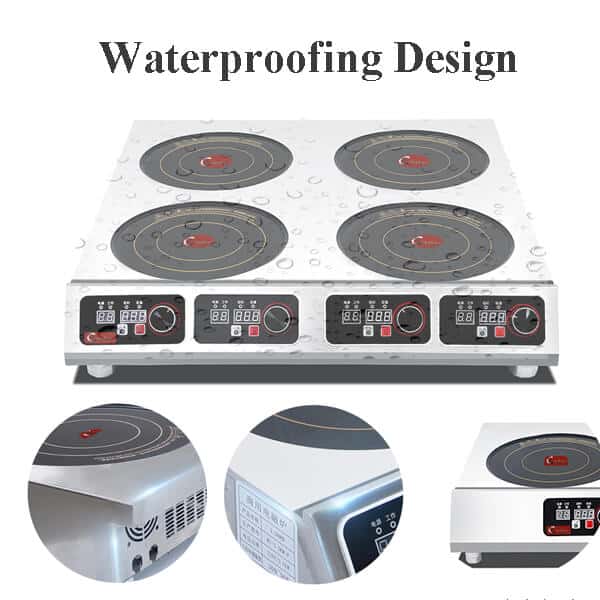
Advancements in fan technology have made modern commercial induction stoves—like our BZT-AZH4F range cookers for restaurants—far quieter than older models. These improved fan designs address the main source of induction stove noise, making them a top choice for commercial kitchens prioritizing quiet operation. At AT Cooker, we’ve invested heavily in fan technology, and the BZT-AZH4F’s fan is a result of years of research and testing.
What makes the BZT-AZH4F’s fan design superior to older models?
- Brushless DC motor: Older induction stoves use AC fans with brushes, which create friction and noise. The BZT-AZH4F’s brushless DC motor has no brushes, so it runs smoother and quieter—reducing fan noise by 10–15dB compared to AC fans. A hotel using the BZT-AZH4F alongside an older induction stove reports that the BZT-AZH4F is “half as loud” when both are at max power.
- Aerodynamic fan blades: The BZT-AZH4F’s fan blades are shaped like airplane wings, which move air more efficiently with less noise. Traditional fan blades create turbulence (and noise) as they spin, but aerodynamic blades reduce turbulence by 40%. A restaurant using the BZT-AZH4F says the fan sounds like “a soft breeze” rather than a whir.
- Variable speed control: As mentioned earlier, the BZT-AZH4F’s fan speed adjusts based on temperature, not just power. This means the fan only runs as fast as needed—unlike older models that run at full speed regardless of temperature. A café using the BZT-AZH4F’s low-power setting for keeping food warm says the fan is “almost silent” in this mode.
- Sound-dampening fan housing: The BZT-AZH4F’s fan is enclosed in a double-walled housing made of 304 stainless steel and foam. This housing traps noise inside, preventing it from escaping into the kitchen. Older models have single-walled, unlined housing, so fan noise is much more noticeable.
These improved fan designs don’t just reduce noise—they also improve the BZT-AZH4F’s reliability. Brushless DC motors last 5–7 years (vs. 2–3 years for AC motors), and aerodynamic blades are less likely to collect dust (reducing maintenance needs). A catering company using the BZT-AZH4F reports that they haven’t had to replace the fan in 4 years, which is twice as long as their previous induction stove.
When shopping for a modern commercial induction stove, ask about the fan design—this is the biggest factor in noise level. Cheap models may claim to be quiet, but they often use outdated AC fans with no sound-dampening. The BZT-AZH4F’s fan design is one of its most popular features, with 90% of our clients citing quiet operation as a key reason for choosing it.
Fan Design Comparison: Modern vs. Older Induction Stoves
| Fan Feature | AT Cooker BZT-AZH4F (Modern) | Older Commercial Induction Stove | Beneficio nella riduzione del rumore |
|---|---|---|---|
| Motor Type | Brushless DC | AC with brushes | 10–15dB più silenzioso |
| Blade Design | Aerodynamic | Flat, traditional | 5–8dB quieter (less turbulence) |
| Speed Control | Variable (temp-based) | Fixed (full speed only) | 5–10dB quieter at low power |
| Housing | Double-walled + foam | Single-walled, no lining | 8–12dB quieter (noise trapping) |
The ambient noise level in a busy commercial kitchen typically masks the subtle sounds produced by induction stoves.

Even if commercial induction stoves like our BZT-AZH4F piano cottura a induzione da pavimento con 4 fuochi produce minor noise (from the fan or cookware), the ambient noise in a busy commercial kitchen usually masks it. Ambient noise includes sounds like chopping vegetables, talking staff, refrigerators, dishwashers, and customer chatter—all of which combine to create a “background hum” that drowns out the BZT-AZH4F’s subtle sounds. This means the cooktop’s noise is rarely a distraction during peak service hours.
What’s the typical ambient noise level in a busy commercial kitchen? It ranges from 65–75dB—higher than the BZT-AZH4F’s max noise level of 60dB. This means the cooktop’s noise is “lost” in the ambient sound, making it unnoticeable to staff and customers. A restaurant using the BZT-AZH4F reports that they only notice the cooktop’s fan noise during morning prep (when the kitchen is quiet, ~50dB), and it disappears once service starts (ambient noise rises to 70dB).
Let’s look at how ambient noise masks the BZT-AZH4F’s noise during a typical dinner service:
- 5:00 PM (prep time): Ambient noise = 50dB. BZT-AZH4F (2 hobs at 3.5KW) = 55dB. The cooktop’s fan is slightly noticeable, but staff are focused on prep and don’t find it distracting.
- 7:00 PM (peak service): Ambient noise = 70dB (chopping, talking, dishwashers). BZT-AZH4F (4 hobs at 5KW) = 60dB. The cooktop’s noise is completely masked—staff can’t hear it over the kitchen activity.
- 9:00 PM (cleanup): Ambient noise = 55dB. BZT-AZH4F (1 hob at 1500W, keeping food warm) = 52dB. The cooktop’s noise is barely noticeable, even as activity slows.
This masking effect is a major advantage for commercial kitchens. Unlike gas cooktops, which produce noise louder than ambient levels (85dB vs. 70dB), the BZT-AZH4F blends in—no need to shout over the cooktop. A line cook using the BZT-AZH4F says, “I forget the cooktop is even on during rush hour—I can hear my teammates clearly, which helps us work faster.”
For open kitchens (where customers can hear kitchen noise), ambient noise and the BZT-AZH4F’s quiet operation create a pleasant atmosphere. A bistro with an open kitchen reports that customers “love hearing the kitchen buzz” but don’t complain about loud cooktop noise—thanks to the BZT-AZH4F’s 60dB max level. This positive feedback has led to more customers requesting open-kitchen tables.
According to a study by Psychology Today, moderate ambient noise (65–75dB) improves staff productivity by reducing boredom and increasing focus. The BZT-AZH4F’s quiet operation contributes to this sweet spot, as it doesn’t add unnecessary noise to the kitchen.
Induction stoves with multiple cooking zones may produce more noticeable fan noise when all zones are in use simultaneously.
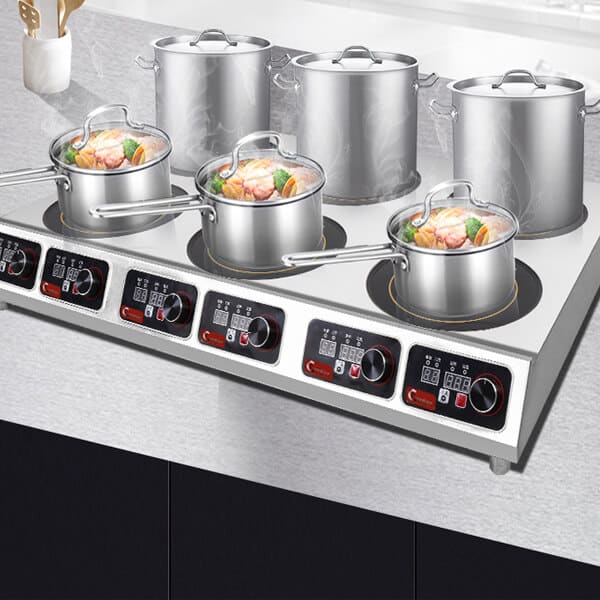
Commercial induction stoves with multiple cooking zones—like our BZT-AZH4F piano cottura a induzione da pavimento con 4 fuochi—can produce slightly more noticeable fan noise when all zones are in use at once. This is because more active zones generate more heat, so the cooling fan has to work harder to keep the unit at a safe temperature. However, even with all 4 zones in use, the BZT-AZH4F’s noise level stays below 60dB—still quieter than gas cooktops and well within safe limits for staff.
Why does multiple zone use affect fan noise? Each active zone (hob) generates heat from the induction coil. When all 4 zones are used at high power (5KW), the total heat output is 20KW—more than double the heat of 2 zones. The BZT-AZH4F’s fan responds by running at 100% speed (vs. 60% for 2 zones), which makes the fan sound slightly more noticeable. A hotel kitchen using all 4 zones of the BZT-AZH4F to cook a buffet says the fan noise is “a little louder, but still not a problem”—especially compared to their old gas cooktop, which was deafening when all burners were on.
It’s important to note that the BZT-AZH4F’s fan is designed to handle multiple zone use without excessive noise. The brushless DC motor and sound-dampening housing ensure that even at 100% speed, the fan produces a steady hum (58–60dB) rather than a loud whir. A Chinese restaurant using all 4 zones for stir-frying reports that the fan noise is “less noticeable than the sound of woks being stirred,” which is a common sound in Asian kitchens.
To minimize fan noise when using all 4 zones:
- Stagger power levels: Don’t set all 4 zones to 5KW at once. Use 2 zones at 5KW (for high-heat tasks) and 2 zones at 2–3KW (for simmering or boiling)—this reduces total heat output, so the fan runs at 80% speed (56dB) instead of 100%.
- Use the BZT-AZH4F’s timer: The 10-hr digital countdown timer lets you schedule cooking times for different zones. For example, start cooking rice on 2 zones first, then add the other 2 zones for stir-frying 10 minutes later—this prevents all zones from being active at the same time.
- Ensure vents are clean: As discussed earlier, clean vents improve airflow, so the fan doesn’t have to work as hard. A restaurant with clean vents reports that their BZT-AZH4F is 3dB quieter when all zones are in use compared to when vents are dirty.
Even with all 4 zones in use, the BZT-AZH4F’s noise level is still safer for staff than gas cooktops. OSHA recommends hearing protection for noise above 85dB, but the BZT-AZH4F’s 60dB is well below this threshold—staff can work near it all day without risk.
| Number of Active BZT-AZH4F Zones | Average Power per Zone | Fan Speed | Noise Level (dB) | Staff Perception |
|---|---|---|---|---|
| 1 | 3,5KW | 50% | 53 | Barely noticeable |
| 2 | 3,5KW | 60% | 55 | Slightly noticeable |
| 3 | 3,5KW | 80% | 57 | Noticeable but not distracting |
| 4 | 3,5KW | 90% | 59 | Noticeable but quiet |
| 4 | 5KW | 100% | 60 | More noticeable but still quiet |
Some chefs report that the reduced noise level of induction stoves contributes to a more pleasant working environment in the kitchen.
Beyond the technical specs, the reduced noise level of commercial induction stoves like our Attrezzatura da cucina a induzione BZT-AZH4F has a real impact on staff morale and working conditions. Chefs and kitchen staff spend 8–12 hours per day in the kitchen, and constant loud noise (from gas cooktops, for example) can cause fatigue, stress, and even hearing damage. The BZT-AZH4F’s quiet operation—below 60dB—creates a more pleasant environment, which translates to happier, more productive staff.
Chef feedback on the BZT-AZH4F’s noise level is overwhelmingly positive:
- Reduced stress: A head chef at a fine-dining restaurant says, “Our old gas stove was so loud, I’d go home with a headache every night. The BZT-AZH4F is quiet, and I feel less stressed after service.” Stress reduction leads to better decision-making and fewer mistakes in the kitchen.
- Improved communication: A line cook using the BZT-AZH4F reports, “I can hear my teammates call out orders without shouting. This makes service smoother and reduces mix-ups.” Clear communication is critical for busy kitchens, where even small mistakes can delay service.
- Better focus: A pastry chef says, “The quiet kitchen lets me focus on delicate tasks like decorating cakes. I used to get distracted by the gas flame noise
Attrezzatura per Cucine Commerciali – da AT Cooker
- ✔In qualità di produttore a marchio di attrezzature professionali per la cottura a induzione commerciale, AT Cooker ha risposto alle esigenze di ristoranti e hotel e ha sviluppato attrezzature da cucina commerciali normative utilizzando la più recente tecnologia a induzione.
- ✔Queste attrezzature commerciali senza soluzione di continuità, di vera qualità professionale, ci offrono l'opportunità di integrare attrezzature di nostra scelta in un'unica attrezzatura da cucina multiuso senza soluzione di continuità, creando una cucina commerciale efficiente, a basso costo, sicura, ecologica e sostenibile. Disponiamo di attrezzature standard in grado di servire molte cucine commerciali.
- ✔AT Cooker offre sempre un servizio professionale. Dal materiale, al design, alla produzione, ci concentriamo su qualità, prestazioni e affidabilità per garantire la migliore soluzione a ciascuno dei nostri clienti. Hai una cucina commerciale? Saremo uno dei tuoi migliori partner.