Hood Code Reality: 11 Commercial Griddle Insights on Type I vs Type II
5-year Warranty | 2-year Free Exchangeable | 1-year Free Return
AT Cooker Uitvoerende Inset: Ventilation is the most expensive and misunderstood part of a restaurant build-out. There is a dangerous myth that switching from gas to electric induction means you don’t need a hood. This is false. However, the reality is nuanced. While you cannot evade commercial kitchen ventilation codes, you can significantly reduce your construction and operating costs. AT Cooker Commercial Induction Griddles produce no combustion plumes, allowing for 30-50% lower exhaust rates. This guide demystifies the Type I vs Type II hood debate to save you from inspection failures and budget blowouts.
Every restaurant owner fears the Health Department and Fire Marshal. One of the most common reasons for a failed opening inspection is improper ventilation. The rules are strict: grease hood requirements dictate that if you produce grease-laden vapors, you need a Type I hood with fire suppression.
But does an induction griddle produce grease? Yes. Does it produce combustion fumes? No. This distinction is where the savings lie. By understanding the interaction between NFPA 96 electric griddle standards and modern induction technology, you can spec a ventilation system that is smaller, quieter, and cheaper, while still being fully compliant.
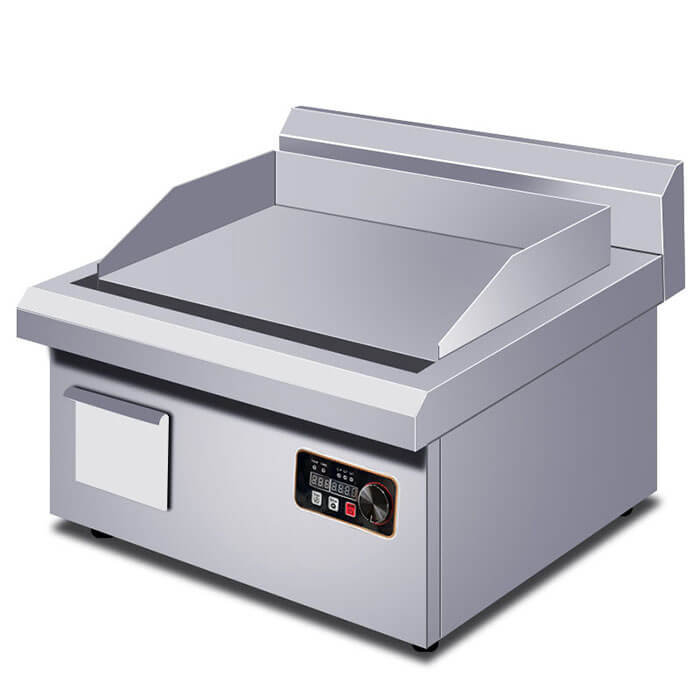
Komersial Dapur Peralatan -ti AT Cooker
- Salaku produsén merek tina profésional komersial induksi masak alat, AT Cooker geus ngaréspon kana réstoran & hotél urutan jeung panalungtikan normatif komersial masak alat ngagunakeun téhnologi induksi panganyarna.
- Ieu mulus, nyata komersial kualitas komersial masak alat nyadiakeun urang kalawan kasempetan pikeun ngasupkeun alat pilihan urang kana hiji mulus, multipurpose masak alat nyieun efisien, ongkos low, aman, héjo jeung sustainable dapur komersial. Kami geus standerd alat bisa ngalayanan loba dapur komersial.
- AT Cooker salawasna nawarkeun layanan profésional. Ti bahan, desain, nepi ka ngahasilkeun, urang focuse on kualitas, kinerja jeung reliabilitas pikeun mastikeun solusi pangalusna dikirimkeun pikeun unggal jeung unggal salah sahiji konsumén urang. Boga dapur komersial? Kami bakal jadi salah sahiji mitra pangalusna anjeun.
Tensão de trabalho
| Monofásico | Trifásico |
|---|---|
| 120V, 220V | 208V/ 240V, 380V, 480V |
Estoque global + Retirada rápida
| EUA | Reino Unido | Alemanha | França |
|---|---|---|---|
| Itália | Espanha | Bélgica | Bulgária |
1. NFPA 96 mandates Type I hoods for any griddle producing grease-laden vapors.
The “Electric Loophole” is a dangerous myth. NFPA 96 (Standard for Ventilation Control and Fire Protection) does not care about your fuel source; it cares about what you are cooking. If you are grilling burgers, searing steaks, or frying bacon, you are creating grease-laden vapors.
Regardless of whether the heat comes from gas or induction, these vapors require a Type I hood with a fire suppression system. Installing a Type II hood (designed for heat/steam only) over a grease-producing appliance is a code violation that will shut you down.
2. Type II hoods are strictly for heat/steam (condensate); cooking burgers on them violates fire codes.
Type II hoods lack the grease filters and fire suppression required to handle flammable particulates. They are designed for dishwashers, steam tables, and light baking ovens.
Using an induction griddle for anything other than boiling water or toasting dry bread under a Type II hood is illegal. Health department codes are clear: grease requires Type I. Don’t let a contractor tell you otherwise to save money.
3. Induction griddles typically qualify for 30-50% lower CFM exhaust rates.
While you still need a Type I hood, it can be smaller and weaker. Gas griddles create a massive thermal plume of hot combustion gases that must be exhausted. Induction creates no combustion plume.
This allows mechanical engineers to calculate the exhaust rate based on the “cooking duty” alone, not the fuel combustion. This often results in a 30-50% reduction in required CFM (Cubic Feet per Minute), lowering the cost of the fan, ductwork, and makeup air unit.
4. Ventless (UL 710B) systems are viable with induction but physically impossible for gas.
For historic buildings or skyscrapers where ductwork is impossible, “Ventless” hoods are the only option. These recirculating systems use filters to clean the air.
Because gas appliances produce Carbon Monoxide (CO), they cannot be used with ventless hoods. Induction produces zero CO, making it the perfect partner for UL 710B mga sistema na sertipikado na walang bentilasyon, na nagbubukas ng mga lokasyon na dati ay imposible para sa isang restawran.
5. Ang paggamit ng Type II hoods para sa induction griddles ay ang #1 na sanhi ng pagkabigo sa mga inspeksyon sa kalusugan sa mga eco-kitchen.
Nakikita natin ito palagi: ang isang “Green Kitchen” ay nag-i-install ng induction upang makatipid ng enerhiya, sinusubukang magtipid sa Type II hood, at nabibigo sa inspeksyon sa araw ng pagbubukas.
Alam ng mga inspektor na ang pag-iihaw ng karne ay lumilikha ng grasa. Kung makakita sila ng griddle sa ilalim ng steam hood, awtomatiko itong mabibigo. Siguraduhin ang iyong commercial kitchen ventilation codes pagsunod sa pamamagitan ng pag-spec ng Type I mula sa unang araw.
5-year Warranty | 2-year Free Exchangeable | 1-year Free Return
6. Ang kawalan ng thermal updraft ng induction ay nagbibigay-daan para sa mga “proximity hoods” na mas malapit sa pinagmulan ng pagkain.
Ang mga gas appliance ay nangangailangan ng hood na may mataas na clearance upang makuha ang lumalawak na ulap ng mainit na gas ng combustion. Ang mga plume ng induction ay mas malamig at mas kontrolado.
Ito ay nagbibigay-daan para sa “Proximity Hoods” o “Eyebrow Hoods” na mas malapit sa ibabaw ng griddle. Ang mga ito ay kumukuha ng grasa nang mas mahusay sa pinagmulan na may mas mababang dami ng hangin, na nagpapabuti sa kahusayan ng enerhiya.
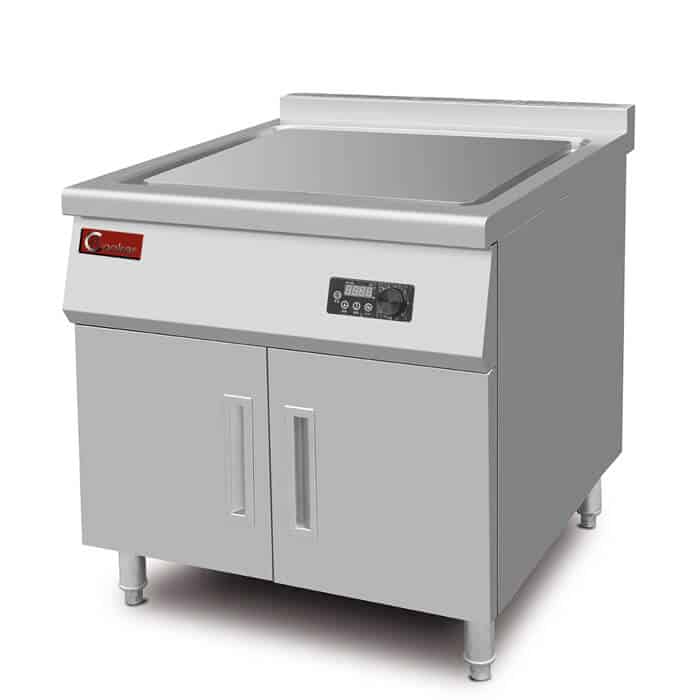
7. Ang Makeup Air (MUA) units ay maaaring makabuluhang bawasan dahil ang induction ay hindi kumokonsumo ng oxygen.
Ang gas ay nagsusunog ng oxygen. Para sa bawat cubic foot ng gas na nasusunog, kailangan mong magbigay ng sariwang hangin. Ito ay nangangailangan ng malalaking Makeup Air (MUA) units upang balansehin ang presyon ng gusali.
Ang induction ay kumokonsumo ng zero oxygen. Kailangan mo lamang palitan ang hangin na iyong inilalabas. Ito ay nagbibigay-daan sa iyo na bawasan ang iyong MUA unit, makatipid ng libu-libong dolyar sa HVAC equipment at tempering costs (pag-init/paglamig ng papasok na hangin).
8. Ang mga gas pilot ay nangangailangan ng 24/7 na bentilasyon; ang induction ay nagbibigay-daan sa mga demand-controlled hood na huminto.
Kung mayroon kang pilot light, kailangan mong patakbuhin ang iyong hood fan 24/7 (o kahit man lang habang naroroon ang staff) upang ilabas ang CO. Ang induction ay nagbibigay-daan para sa tunay na “Demand Control Ventilation” (DCV).
Kapag ang induction griddle ay naka-off, ang hood ay maaaring naka-off. Ang mga optical o heat sensor sa hood ay maaaring magpababa ng fan hanggang zero sa mga lulls, na nakakatipid ng malaking halaga ng kuryente.
15. Ang mas malamig na induction plumes ay pumipigil sa grasa na masunog sa mga baffle filter.
Ang exhaust ng gas ay mainit (400°F+). Ito ay nagpapasunog ng grasa sa mga filter ng hood, na ginagawang mahirap linisin. Ang exhaust ng induction ay mas malamig (karamihan ay singaw at grasa na singaw).
Ang grasa ay mas madaling mag-condense sa mga baffle at dumaloy pababa sa tasa sa halip na mag-carbonize. Pinapanatili nito ang ductwork na mas malinis at binabawasan ang dalas ng mga propesyonal na serbisyo sa paglilinis ng duct.
10. Ang mga patakarang Tsino na “Blue Sky” ay nagtataguyod ng induction dahil inaalis nito ang mga NO2 emissions.
Sa Asya, ang mga regulasyon sa kapaligiran ay nagta-target ng Nitrogen Dioxide (NO2) emissions mula sa mga komersyal na kusina. Ang gas combustion ay isang pangunahing pinagmulan ng NO2.
Ang induction ay zero-emission sa punto ng paggamit. Ang paglipat sa induction ay nagpapasimple ng environmental permitting sa mahigpit na mga urban zone at nagpapalakas sa iyong kusina laban sa mga paparating na “Decarbonization” laws sa mga lungsod sa Kanluran.
11. Ang mga Asian integrated “Purifier-Griddles” ay gumagamit ng electrostatic precipitators upang laktawan ang external ductwork.
Isang trend na lumalabas mula sa Asya ay ang integrated induction griddle na may built-in na hood na naglalaman ng Electrostatic Precipitator (ESP).
Ang mga yunit na ito ay naglilinis ng grasa at usok sa loob at naglalabas ng malinis na hangin pabalik sa silid. Habang ang mga code sa Kanluran ay humahabol, ang teknolohiyang ito ay nagbibigay ng sulyap sa hinaharap ng ductless commercial cooking, na posible lamang sa malamig na operasyon ng induction.
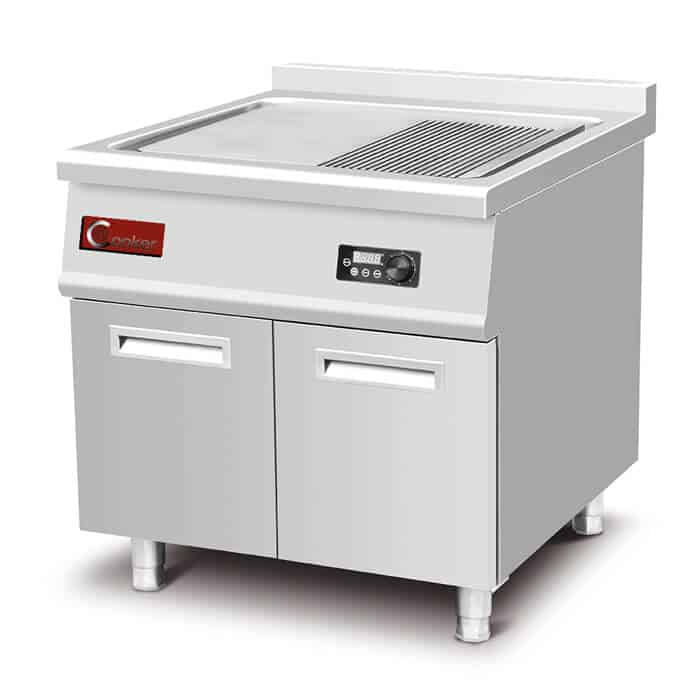
| Regulasyon | Chapa a Gás | AT Cooker Induction |
|---|---|---|
| Uri ng Hood | Type I (Mandatory) | Type I (Mandatory) |
| CFM Rate | Mataas (Combustion load) | Mababa (Cooking load lamang) |
| Ventless (UL710B) | Impossível (gás CO) | Compatível |
| Ar de Reposição | Alta Exigência | Baixa Exigência |
5-year Warranty | 2-year Free Exchangeable | 1-year Free Return
Pensamentos Finais do AT Cooker
Não tente enganar o código; otimize-o. Com AT Cooker Commercial Induction Griddles, você ainda precisará de uma coifa Tipo I, mas ela será menor, mais silenciosa e mais barata de operar do que qualquer sistema a gás.
Com estoque pronto para entrega rápida no EUA, Alemanha, França, Reino Unido, Bélgica, Itália, Espanha e Bulgária, podemos ajudá-lo a projetar uma cozinha compatível e de alta eficiência. Visite nossa Sobre Nós página para consultar nossos especialistas em ventilação.